
Summer: Rutgers- Food and Mediterranean Culture
The Program
Through a combination of in-class lectures and experiential learning, students will gain a deep understanding of the historical, cultural and culinary aspects of food production and consumption in the Mediterranean region.
This course will provide in-depth knowledge and analysis of food production and consumption in the Mediterranean region using a food systems approach. Students will learn about the various components of the Mediterranean Diet pattern, its health, economic, social and environmental considerations and trade-offs, as well as how to measure its adherence.
Program Locations
Greece
Athens
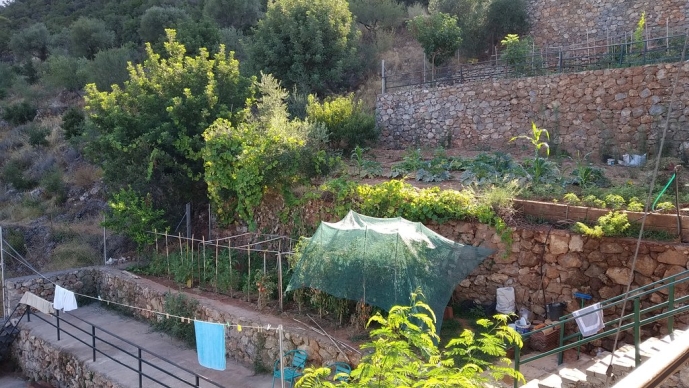
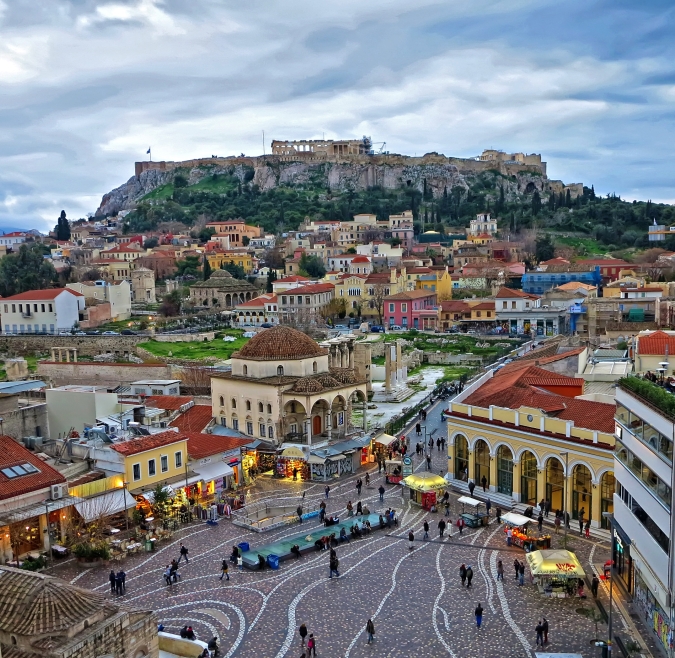
This course will begin in the Greek capital of Athens before moving to the Peloponnese region of Greece, specifically the cities of Kalamata and Napflio. The Peloponnese peninsula is in southern Greece. The mild Mediterranean climate of the peninsula creates the perfect growing conditions for the produce that makes up the foundation of the Mediterranean diet.
Academics
By completing this course, students will be able to:
- Identify the historical, cultural and culinary aspects of food consumption within the Mediterranean region
- Describe the Mediterranean Diet model and its health and environmental implications
- Measure and critically analyze adherence to the Mediterranean Diet model
- Analyze the ways in which local food systems can better support the production and sale of food resources in accordance to a Mediterranean lifestyle
- Formulate strategies to promote a Mediterranean lifestyle in both Greece and the United States
For information about Study Abroad credit transfer, registration, and transcripts please visit the Academics section of our website.
This program counts as an elective course for School of Public Health Students, particularly in Global Public Health.
The course is also open to graduate students from other universities admitted to the School of Public health in non-matriculated status. Registration priority will be assigned as follows:
- Graduate students from Rutgers School of Public Health
- Graduate students from other schools at Rutgers
- Graduate Students from other universities
- Undergraduate Seniors.

Housing and Meals
Students will be staying in hotels and local B&Bs throughout the two-week courses. During the week (on class days) students will be provided breakfast and lunch and will be responsible for their dinner. On weekends (non-class days) students will be provided breakfast and will need to provide their own lunch and dinner.
Financial Information
Program Costs
| NJ Resident | non-NJ Resident | |
|---|---|---|
| Graduate | $6,069 | $7,680 |
| Online | $6,876 |
Program Cost includes:
- Tuition (3 graduate credits School of Public Health)
- Housing
- Local transportation in Greece
- Most meals
- All Excursions
- Administrative Fees
- Emergency Medical Access Abroad
Out-of-Pocket Costs
| Airfare | $1,200 |
| Meals | $100 |
| Books and Classroom Materials | $50 |
| Personal Expenses | $100 |
| Total | $1,450.00 |
Out-of-Pocket Cost includes:
The above costs are estimations and represent the known out-of-pocket costs students encounter during their time abroad.
Some of these expenses will be paid for prior to going abroad, such as an airline ticket, while some of these expenses, such as meals and personal expenses, will be paid in-country as part of your daily expenses. As you plan, you will need to budget these costs and spend wisely throughout your time abroad.
Scholarships
Faculty Leaders

Emily V. Merchant, Ph.D., is an assistant professor in the Department of Urban-Global Public Health at the Rutgers School of Public Health. Dr. Merchant is an alumnus of Rutgers University where she received both her B.S and Ph.D. During her undergraduate education, Dr. Merchant studied the impact of climate change in Antarctica using autonomous underwater vehicles. Post-graduation, she pivoted to working on climate change closer to home and spent five years promoting sustainability within the New Jersey food system through consumer and health focused initiatives. This led to her pursuit of a graduate degree where she studied health outcomes associated with increased consumption of indigenous and traditional leafy greens in Kenya and Zambia.
As a faculty member focused on contributing to the education program at the school, Dr. Merchant is excited to lead students in active discussions and activities on global food and culture, food systems, global public health, and more as well as use her research portfolio as a vehicle to increase student engagement both in and out of the classroom