
Summer: Rutgers- RU Archaeological Field School in Italy
The Program
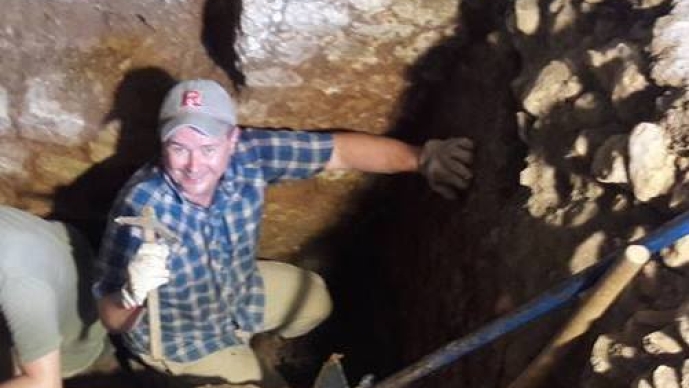
This program will introduce undergraduate and graduate students to a variety of archaeological techniques and ideas while helping to significantly advance research of our archaeological project. We plan to focus our excavation efforts on the Roman town-site at Cures Sabini in the historic medieval town of Fara in Sabina. By the end of the field school, students will be familiar with a variety of archaeological excavation and recording techniques, having performed many of them at the villa. On the weekends, students will be able to go to Rome (40 minutes by train) and other places in Italy for personal travel.
Program Locations
Italy
Sabina Region
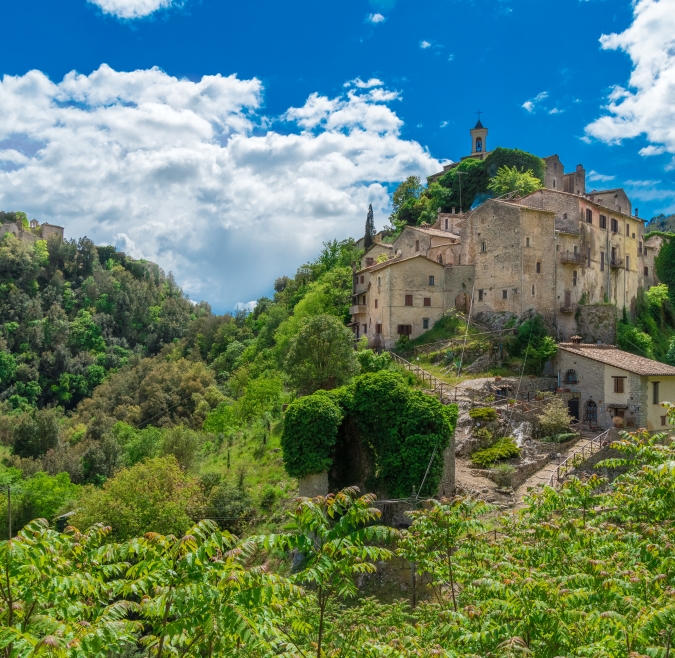
The Sabina region, just 25 miles north of Rome, is one of the most beautiful in all of Italy, between the Tiber River and the Apennine mountains. Fara in Sabina is a historic town, home to the Farfa Abbey, one of the most important medieval monastic centers in Europe. In Roman times, the city of Cures Sabini, the believed hometown of the ancient Sabines, was located in Fara in Sabina. Wealthy Romans owned villas through the countryside around Cures, exploiting the town’s proximity to the Tiber River in order to transport goods downriver to Rome.
Academics
Site Work: We work on site Mondays through Fridays from 7:00am to 1:30pm. On site, you will be under the direction of a trench supervisor that you’re assigned to. You will learn how to excavate and record archaeological materials in a stratigraphic manner by doing this on site under the direction of your supervisor and possibly other staff members. In this way, your trench supervisors are your lead instructors on the villa site. Each week we will rotate you among the trenches so you can experience different parts of the site.
For most afternoons, you will be called upon to clean ceramics or work on other aspects of the project (e.g., cleaning wall plaster, working on bioarchaeological flotation). During this work, you will be supervised by one of our staff who specializes in these areas.
Archaeological Seminars: In addition to regular fieldwork and ceramics-work, we will have a discussion of assigned readings on set days during the week. The lectures will be on topics of interest and relevance to our site and will be conducted by various staff members. Right now, we plan to have our discussions on the dates listed in the schedule below in the early evening before dinner at our residence .
Check out the project website: https://fieldschool.rutgers.edu
Housing and Meals
Students will share rooms in a traditional agriturismo (http://www.borghettodarci.it/en/). Meals and snacks will be provided both at the agriturismo restaurant and on site.
Financial Information
Program Costs
| NJ Resident | non-NJ Resident | |
|---|---|---|
| Program Cost | $6,300 | $7,020 |
Program Cost includes:
• Tuition
• Housing
• Most Meals
• Excursions
• Administrative Fees
• Emergency Medical Access Abroad
Out-of-Pocket Costs
| Airfare | $1,500 |
| Meals | $400 |
| Books and Classroom Materials | $75 |
| Local Transportation | $75 |
| Personal Expenses | $300 |
| Total | $2,350.00 |
Out-of-Pocket Cost includes:
The above costs are estimations and represent the known out-of-pocket costs students encounter during their time abroad.
Some of these expenses will be paid for prior to going abroad, such as an airline ticket and visa costs, while some of these expenses, such as meals and local transportation, will be paid in-country as part of your daily expenses. As you plan, you will need to budget these costs and spend wisely throughout your time abroad.
Program Costs
| NJ Resident | non-NJ Resident | |
|---|---|---|
| 2 weeks 3 credits | $6,450 | $6,810 |
| 4 weeks 6 credits | $6,750 | $7,430 |
Program Cost includes:
• Tuition
• Housing
• Most Meals
• Excursions
• Administrative Fees
• Emergency Medical Access Abroad
Out-of-Pocket Costs
| Airfare | $1,500 |
| Meals | $400 |
| Books and Classroom Materials | $75 |
| Local Transportation | $75 |
| Personal Expenses | $300 |
| Total | $2,350.00 |
Out-of-Pocket Cost includes:
The above costs are estimations and represent the known out-of-pocket costs students encounter during their time abroad.
Some of these expenses will be paid for prior to going abroad, such as an airline ticket and visa costs, while some of these expenses, such as meals and local transportation, will be paid in-country as part of your daily expenses. As you plan, you will need to budget these costs and spend wisely throughout your time abroad.
Scholarships
Faculty Leaders
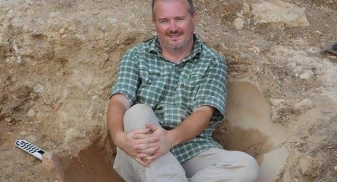
Gary Farney is an Associate Professor at Rutgers-Newark. A Roman historian and archaeologist, he specializes in ancient Italian group identity, Roman villas and Roman Republican political culture. He has operated multiple study abroad programs on behalf of Rutgers University in Greece, Italy and Malta, including the Rutgers University Archaeological Field School in Italy from 2012 until 2023 at the Roman villa site at Vacone, Italy.