
Summer: Rutgers Meets Japan: Exploring a Transpacific Legacy
The Program
Explore Japan, old and new, as you extend your imagination 150 years into the past, when two Rutgers students from opposite sides of the Pacific encountered one another and discovered a friendship that helped bridge two worlds.
This year is especially significant, as Rutgers celebrates the 150th anniversary of The Mikado’s Empire, written by William E. Griffis (Rutgers Class of 1869), as well as the 100th anniversary of Griffis’s final visit to Japan, during which he received a medal of honor from the Emperor of Japan. To commemorate these milestones, Professor Haruko Wakabayashi of the Department of Asian Languages and Cultures will take students in Griffis’s footsteps, from Yokohama, the port city where he first arrived in Japan and which remains a vibrant and cosmopolitan city today, to Fukui, where students will experience aspects of traditional Japan through Zen meditation at a temple, Japanese paper-making, and hot springs, and finally to Tokyo, Japan’s bustling capital and the center of one of the world’s most populous metropolitan areas.

Program Locations

Japan
Yokohama
We will begin our trip with a dinner at Chinatown in Yokohama, a vibrant and cosmopolitan port city, where the first American missionaries laid their feet in 1859. We will visit museums and archives and participate in gatherings with students and teachers at Ferris High School/University which was headed by Rutgers alumni in its early years.

Japan
Fukui
In Fukui, the home of Rutgers’ first Japanese samurai student, we will experience some of the old, traditional Japanese culture (Zen meditation at the temple, Japanese papermaking, etc.). We will also join students and faculty at the Fukui University in their seminars and other activities

Japan
Tokyo
Tokyo, the ever-changing capital city of Japan. In Tokyo, we will follow the footsteps of William E. Griffis, as we visit the ancient temple Asakusa and the University of Tokyo, where Griffis taught for two years before returning to the U.S.
Academics
The field experience, led by Professor Haruko Wakabayashi (Asian Language and Cultures), will explore Japan that William E. Griffis saw 150 years ago and the legacies of early Rutgers-Japan relationship that are present in Yokohama, Fukui, and Tokyo. Through walking tours, museum and archival visits, and engagement in seminars and workshops with Japanese students and scholars, students will investigate the nature of early cultural contacts between the United States and Japan and the diverse perspectives through which the encounters have been remembered and told.
No knowledge of Japanese is required. Students from all backgrounds are encouraged to apply.
This trip is designed to complement the course "Rutgers meets Japan: Revisiting Early U.S.- Japan Encounters" (01:565:425 and Interdisciplinary Honors Seminar). Students who have taken or are taking the course are given priority.
Host institutions: Fukui University, and Fukui Prefecture/City
Housing and Meals
Students will stay in local hotels and will share a room. Students are responsible for their meals unless otherwise indicated.
Scholarships
Faculty Leaders
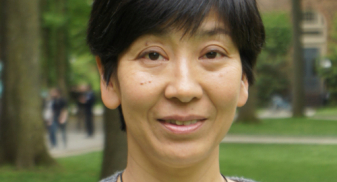
Haruko Wakabayashi is a cultural historian of premodern Japan. She earned her Ph.D. in Japanese history from Princeton University and has been teaching at Rutgers since 2017. Her interest lies in the social, cultural, and intellectual development of medieval Japan, and the use of visual sources in the study of history. Meanwhile, as a historian at Rutgers with a bicultural and bilingual background (Japan and the U.S.), she has led the “Rutgers Meets Japan” project focusing on the early relationship between Rutgers and Japan in the late nineteenth century. She recently published the book, Rutgers Meets Japan: A Trans-Pacific Network of the Late Nineteenth Century (Rutgers University Press, 2026). She also serves as a board member of the Japan History Council of NY/Digital Museum of the History of Japanese in New York https://www.historyofjapaneseinny.org/Home.