
Summer: Rutgers -Field Study in Archaeology: Archaeological Sciences & Neanderthals in Spain
The Program
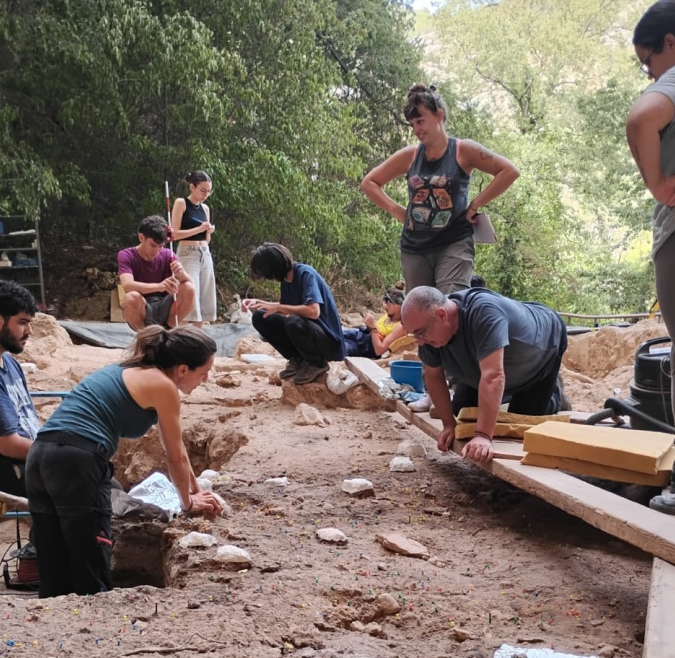
This program will train you in field methods and archaeological sciences, joining a renowned team of experts to study the last Neanderthal communities in Europe. Enjoy an intensive hands-on scientific archaeology experience in El Salt, a Middle Paleolithic site in Alcoy, Spain.
The course will give you a unique opportunity to excavate a site discussed in class while acquiring practical skills in scientific field research. El Salt is a rock shelter used as a camp by Neanderthals around 50,000 years ago. The excavations at the site have provided a wealth of archaeological remains, but more importantly, the current research project is a world leader in archaeological sciences. The interdisciplinary team at El Salt applies methods such as lipid biomarkers, aDNA, soil micromorphology, FTIR, paleomagnetism, or phytoliths to study Neanderthal fire technology and behavior. The expedition at El Salt is an example of scientific success. The results have been published in major scientific journals, and the research team has obtained highly competitive grants. In 2025, the team at El Salt was awarded a prestigious award recognizing its excellent w
Program Locations
Spain
Alcoy
The site of El Salt is on the outskirts of Alcoy, in the southern province of Alicante. Easily accessible by public transportation from Madrid or Valencia, Alcoy is a safe and walkable city where you can enjoy the local cuisine and Mediterranean way of life effortlessly. The city is known for its rich architectural, historical, and cultural heritage. Surrounded by astonishing natural parks, the impressive Mediterranean landscape is dotted with a wealth of archaeological sites that span the last 50,000 years of human history.
Academics
This course will teach you excavation etiquette, advanced Paleolithic field methods, basic lithic tool and faunal analysis, and advanced micro-remain sampling and analytical strategies. At the end of this course, you will be familiar with the different roles in a Paleolithic excavation, you should be able to behave professionally in future excavations, and you will gain practical and theoretical experience in archaeological sciences and human evolution. In addition, you will have the opportunity to meet with several specialists who are leaders in their field of research and build future networking opportunities. This course fulfills the practicum requirement for the minor in Archaeology at Rutgers University.
Housing and Meals
The excavation team is housed in Villa Vicenta, the family house of the local poet Juan Gil-Albert. The house has a privileged location overlooking the Polop river valley, and El Salt is situated within the house's premises. In addition to housing, meals will also be provided by the program. Meals include breakfast, lunch, dinner, and some snacks. One of the advantages of staying in Villa Vicenta is the proximity to the site, but in exchange, we must accommodate limited privacy and shared spaces. Please, read the course syllabus for further details.
Financial Information
Program Costs
| Program Cost | NJ Resident | non-NJ Resident |
|---|---|---|
| Undergraduate | $3,970 | $4,350 |
| Graduate | $4,200 | $4,570 |
Program Cost includes:
- Tuition
- Housing
- All meals
- Airport pickup and in-country transportation
- Excursions
- Administrative Fees
- Emergency Medical Access Abroad
Out-of-Pocket Costs
| Airfare | $1,000 |
| Additional snacks | $30 |
| Personal Expenses | $200 |
| Total | $1,230.00 |
Out-of-Pocket Cost includes:
The above costs are estimations and represent the known out-of-pocket costs students encounter during their time abroad.
Some of these expenses will be paid for prior to going abroad, such as an airline ticket, while some of these expenses, such as meals and personal expenses, will be paid in-country as part of your daily expenses. As you plan, you will need to budget these costs and spend wisely throughout your time abroad.
Scholarships
Faculty Leaders
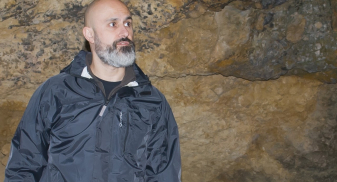
Dr. Dan Cabanes is an associate professor in the Department of Anthropology at Rutgers University and the leading faculty at the Department of Anthropology Laboratory for MicroArchaeology (ALMA). He is also a full faculty member of the Center for Human Evolutionary Studies (CHES). His research aims to understand the association between the environment and human cognitive and cultural evolution. He investigates biological, social, and economic changes using microarchaeological remains.
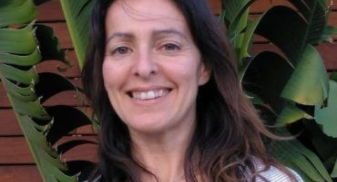
Dr. Mallol is a recognized geoarchaeologist specializing in soil micromorphology and its integration with biomolecular lipid data. Her research focuses on hominid paleoenvironments, Paleolithic fire, Neanderthals, and methods and theories in archaeology. She is the co-director of excavations at El Salt and Abric del Pastor, two Middle Paleolithic sites in Alcoy, Spain

Dr. Hernandez is a specialist in lithic production and archaeological palimpsest dissection, working in Middle Paleolithic hunter-gatherer contexts and the African Middle Stone Age. His research focuses on improving temporal resolution and human-scale behavioral variability through the development of comparative methodological frameworks. He is the co-director of excavations at El Salt and Abric del Pastor, two Middle Paleolithic sites in Alcoy, Spain.