
Summer: Rutgers- Intercultural Communication: Culture, Health, and Society
The Program
You will not study a community from the outside. You will work with the people who live there, alongside Greek students who call it home.
Twelve days in Crete, in the working port city of Heraklion, with a full day along the coast of western Crete and its old harbor towns, and a free Sunday to explore on your own. You'll spend them alongside Greek students from the Hellenic Mediterranean University, in mixed teams formed online in the spring, so that by the time you land you already know the people you'll be working with.
The question at the center of the program is simple to ask and hard to answer: what happens when people try to communicate across difference, and what does it mean for their health and for whether they can reach the care they need? You'll learn the classic frameworks of intercultural communication, then test them in real settings: a day center for older adults in the Municipality of Malevizi, primary care clinics in Heraklion, and social services working with immigrant and refugee families. Your team will study one community's situation and build a communication plan the partner organization can put to use, and present it to them before you leave.
Along the way you'll document what you see and what changes in how you see it, through photographs and short written reflections, using a method developed in public health research.
The program is designed for students from any major who expect to work with people across cultural, linguistic, or institutional lines: communication, public health, nursing, social work, nutrition, and related fields. It is the fourth Rutgers program in Greece led by this faculty team since 2022.

Program Locations

Greece
Heraklion
Heraklion is the largest city on Crete and the island's administrative and academic center, a working port city of roughly 175,000 people rather than a resort. It has been continuously inhabited for millennia; the Palace of Knossos lies just outside it, and the city's Venetian walls and harbor fortress still define its old center. Today it is home to the Hellenic Mediterranean University, the University of Crete, and the region's main teaching hospital, which makes it a natural place to study how health and social services actually reach people. The program is based on the HMU campus, with field visits in Heraklion and in surrounding municipalities including Malevizi, a full-day excursion in western Crete, and an optional visit to Knossos and the Heraklion Archaeological Museum on the program's free day. Late May in Crete is warm but not yet at the height of summer.
Academics
Students earn 3 credits for 04:192:346 Intercultural Communication. For Communication majors, it counts as one of the five upper-level electives required for the major. The course is normally open only to Communication majors and carries prerequisites, but both requirements are waived for students admitted to this program, so you can take it whatever your major. Students in public health, nursing, social work, nutrition, and information science are as much the intended audience as Communication majors, and the team projects are stronger for the mix. MCM graduate students take the program through a parallel graduate-level section, with assignments revised to graduate standard.
Three online meetings before departure, held jointly with the HMU students and co-taught by Rutgers and HMU faculty, cover intercultural communication and positionality, health inequities and social capital, and the Cretan context, and prepare you for the community settings you will enter. Everything else is taught in Crete, where campus teaching days alternate with community field visits, an excursion, a free day, and dedicated days for team project work before the final presentations. A remote wrap-up phase follows, in which teams finalize their written strategy.
Assessment centers on a team community assessment and communication strategy project (55%), an individual Photovoice portfolio and team video (30%), a course content quiz (10%), and in-class and online activities (5%). Students finish with a portfolio of applied international work: a communication strategy delivered to a real organization, a body of reflective photographic work, and experience collaborating across national and disciplinary lines that is directly relevant to graduate study and to professional practice in health, social services, and communication.
Housing and Meals
Students are housed in shared accommodation in Heraklion for the duration of the in-person program, in double rooms with daily breakfast included. The program fee is expected to cover lodging, breakfast daily, lunches on program days, two group dinners (the welcome and closing dinners), transportation between the lodging and the HMU campus, all transportation and entry fees for field visits and excursions, and Rutgers travel health insurance.
Airfare is not included, so that students can arrange their own flights around plans before and after the program. Students are responsible for any meals not included.
Scholarships
Faculty Leaders
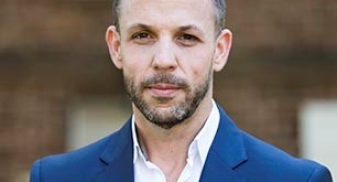
Matthew Matsaganis, Ph.D., is Associate Professor in the School of Communication and Information and Core Faculty at the Rutgers Global Health Institute. He co-directs the IAPP-Greece Initiative, which advances health communication research, education, and practice across the health professions in the United States and Greece. His research examines how communication infrastructures shape health outcomes, equity, and resilience in underserved communities in the U.S. and Europe. A Fulbright Scholar to Greece in 2018 and an affiliated member of the Hellenic Mediterranean University's Laboratory for Social Applied Research and Social Work, he has co-directed three Rutgers study abroad programs in Greece since 2022.

Kleio Koutra, Ph.D., is Associate Professor of Social Work at the Hellenic Mediterranean University and Director of its Laboratory for Social Applied Research and Social Work (SoRSoW), with more than twenty-five years of academic and research experience. She holds a Ph.D. in Public Health and Social Work and an M.P.H. from the University of Crete. Her work centers on adolescent health behaviors, trauma recovery, the social determinants of health, and intercultural competence in health and social care, and she has coordinated or contributed to more than fifteen EU-funded research projects under Horizon Europe and Erasmus+. An affiliate of the Rutgers Global Health Institute, she co-directs the program.